
A 3,000-year tradition, reimagined in San Antonio.
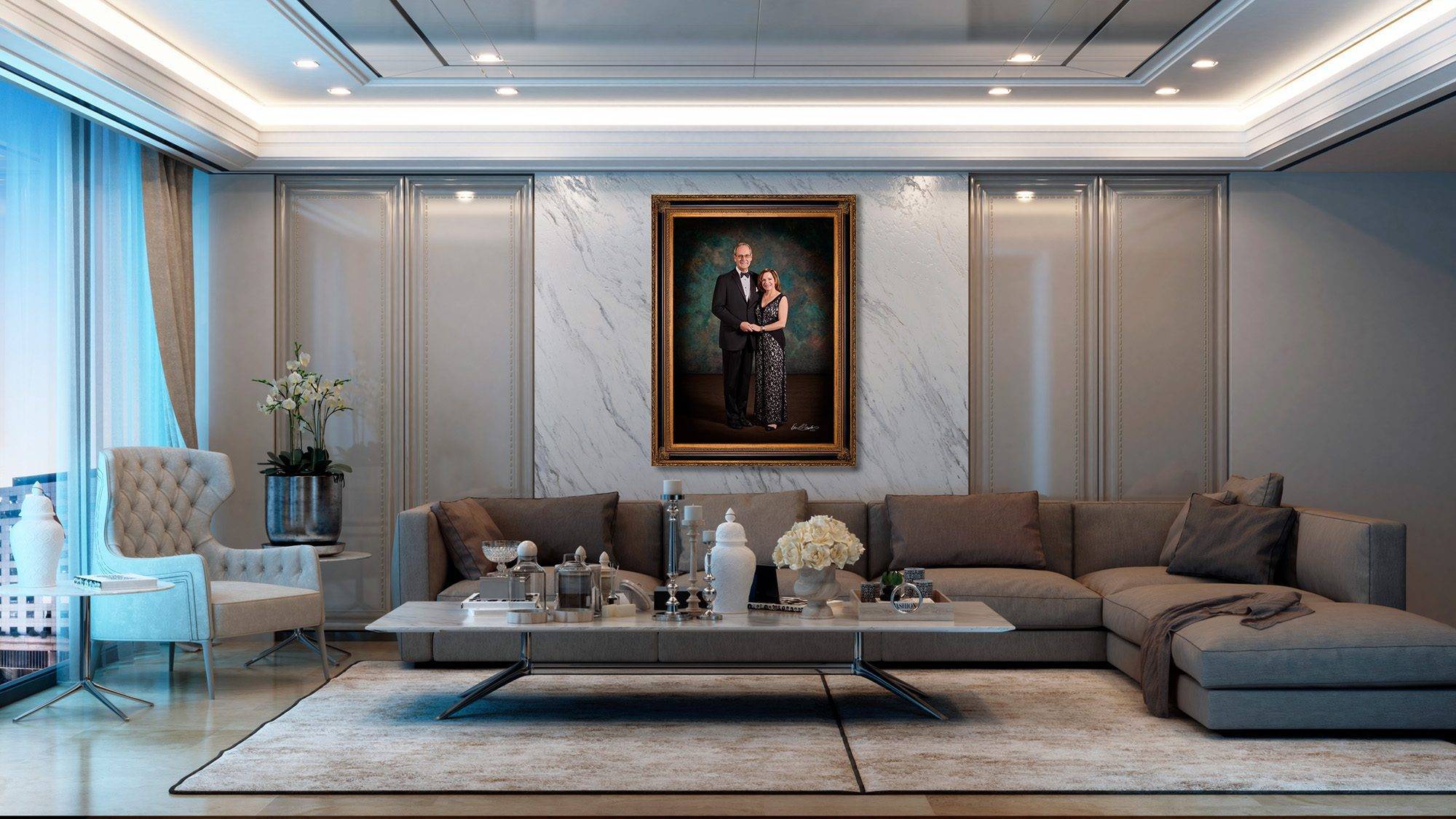
What makes a portrait more than just something to look at, but something that is felt for generations? The answer is a continuous artistic tradition. From the Fayum mummy portraits of ancient Egypt, which offer hauntingly realistic glimpses into lives from two thousand years ago, to the Dutch Masters who made portraiture accessible to merchants and families, portraits have always served as the ultimate record of a meaningful life.
This tradition continues with John Singer Sargent, who revealed the inner life of the Gilded Age, and Yousuf Karsh, who defined the significant figures of the 20th century. It also includes Leonardo da Vinci, who was more than a painter; he was a scientist, engineer, and polymath dedicated to understanding the mathematics of beauty and the science of light.
At KGS Studios, we carry on this multi-disciplinary tradition. Our work is shaped by years of self-taught study in areas like aviation and business, always rooted in the same core principles. We have developed a style that stands alongside the masters, updated for a modern, hyperrealistic look that is neither painting nor photography, but something unique. This guide introduces you to that art.
Beyond “Style”: The Four Pillars of a Kevin G Saunders Portrait.
While other studios may focus on colors and trends, we believe a timeless portrait is built on a firmer foundation. A portrait truly matures after 20 years, or a whole generation, so investing extra time in planning pays off in the long run. These are the four pillars that underpin every commission we undertake.
- Fit: The portrait should feel like it truly belongs in its space. We examine your home’s architecture, lighting, and decor to ensure the finished piece not only complements your home but also becomes an integral part of it.
- Intent: What is the central truth we want to capture? It could be the quiet strength of a leader, the lasting bond of a couple, or the lively spirit of a matriarch. Every choice, from lighting to composition, is guided by this clear artistic purpose.
- Sentimentality: A portrait should do more than record a moment; it should stir emotion. It becomes a vessel for memories, telling a story without words that will stay with your family for generations to come.
- Authenticity: Our process is a close collaboration designed to reveal and capture the true essence of each individual. The finished portrait is not just a passing expression, but a lasting and honest reflection of character.
The KGS Studios Method: Where Art & Science Converge
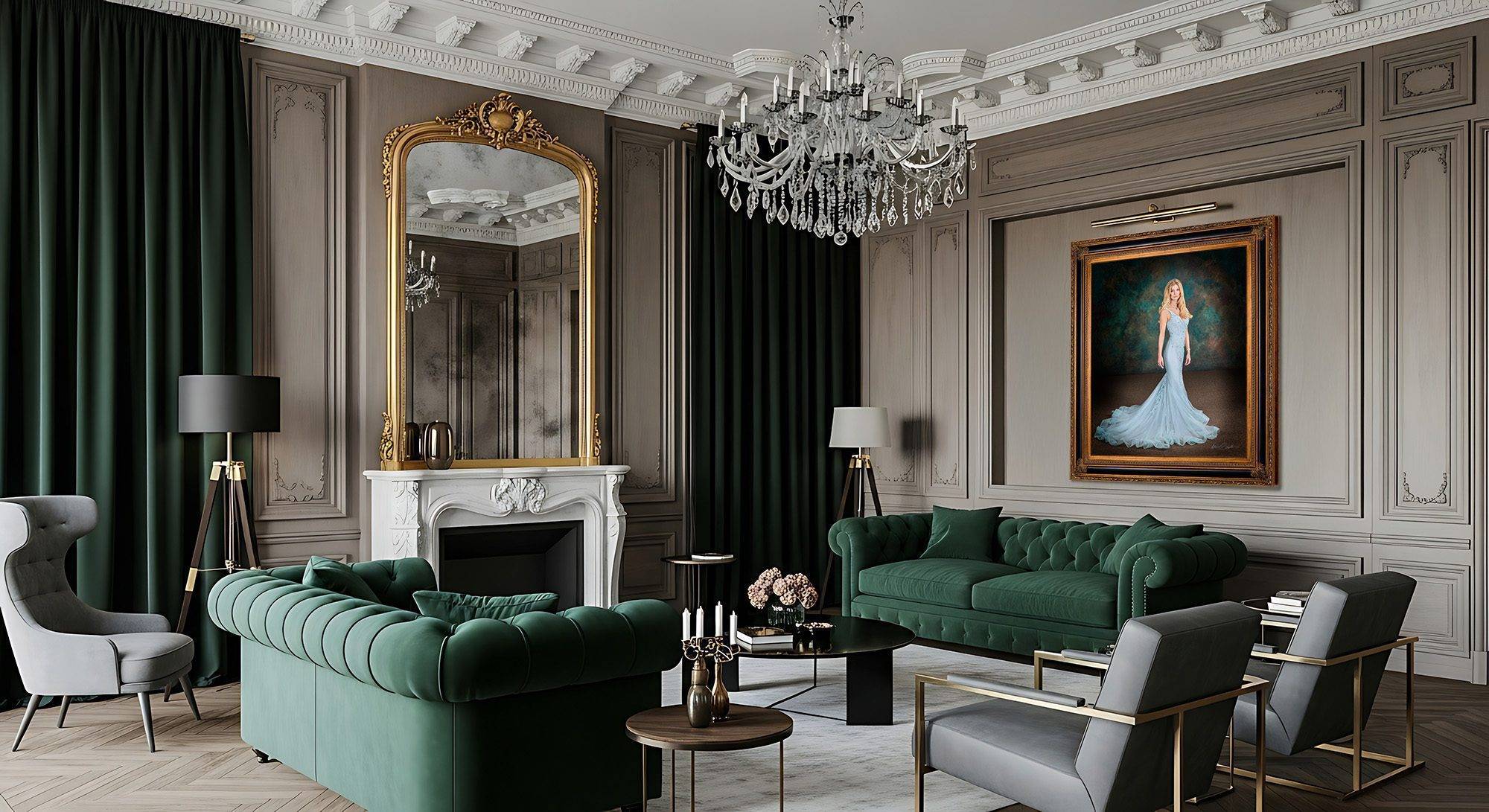
Beauty is not accidental; it follows mathematical rules. Like a plastic surgeon who knows facial proportions, a master artist must understand how we perceive what we see. The classic beauty in our portraits comes from a system designed for perfection.
The Mathematics of Natural Proportion: To prevent the unnatural distortion often seen in photographs, the artist needs to maintain the correct distance from the subject. At KGS Studios, we utilize a Phase One medium-format sensor in Kevin’s view camera, paired with a 105mm prime lens. The optimal distance for this setup is between 18 and 23 feet from the subject, and our studio is well-suited to accommodate this distance.
Why this matters: This setup creates a perspective that aligns with how our eyes perceive people in real life. It removes the distortion that can make limbs or facial features look odd. Since Kevin is not peering into a DSLR camera, this distance also allows the artist and subject to connect naturally, making the session feel like a conversation. Most photographers cannot achieve this classic proportion because they are unable to work at this distance.
The Golden Mean: Compositional Harmony. We follow the same principles of classical harmony, such as the Golden Ratio, used by artists like da Vinci and the builders of the Parthenon. We carefully place the subject, use leading lines, and add negative space to create a portrait that feels balanced and timeless.
Avoiding “Incarceration”: The Importance of Space. Many modern portraits are cropped too tightly, making the subject feel boxed in. A great portrait needs room to breathe. We give our portraits plenty of headroom and foreground so the subject stands out in their space, not trapped by the frame. This use of negative space is a classic technique and helps the portrait last for generations.
A Guide to the KGS Studios Portrait Styles
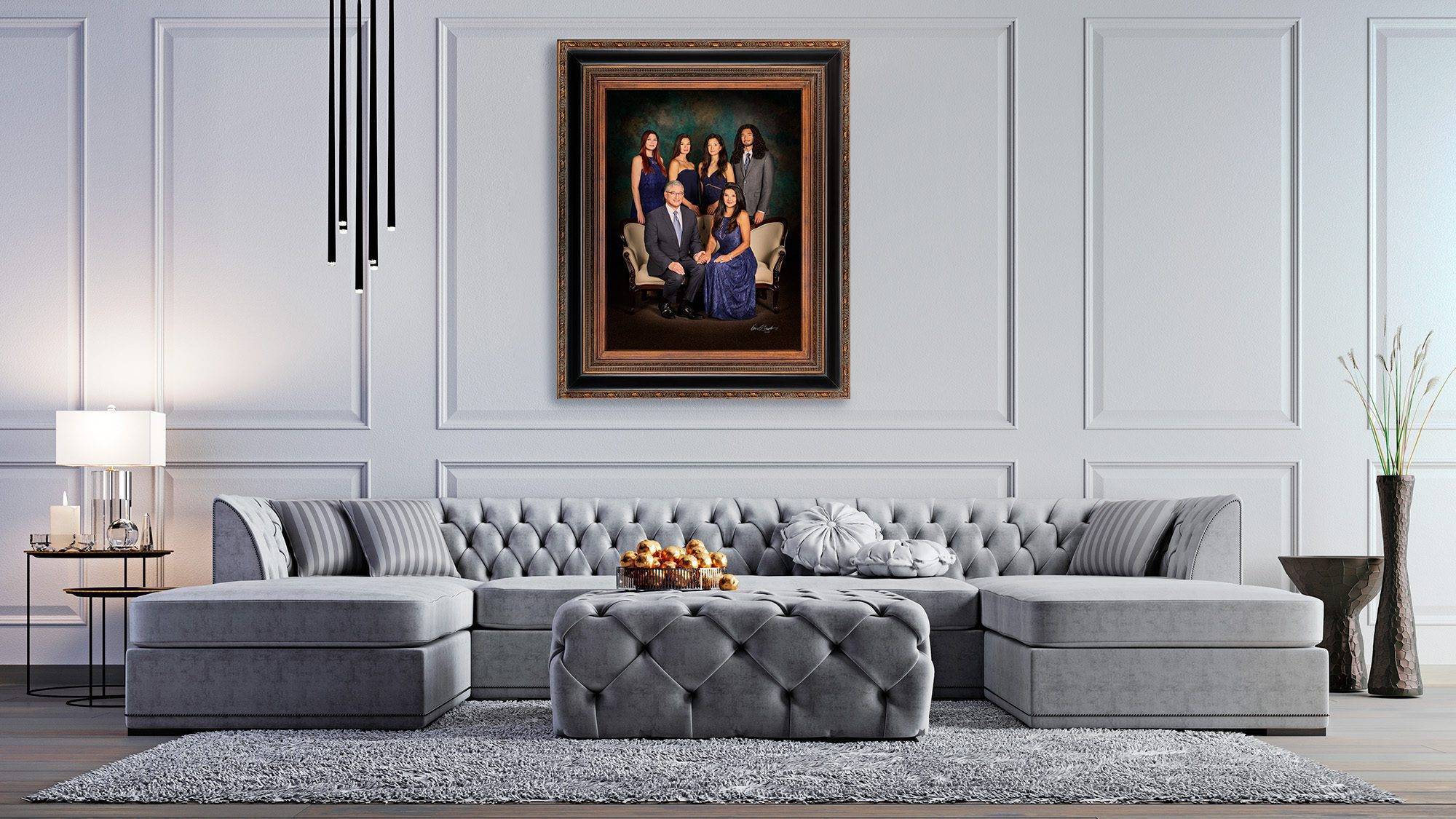
A Note on Family Commissions: Before examining the main styles, a brief note on family portraits. We are often asked to create them, and they are an important part of a family’s story. However, because large groups can be unpredictable, the most significant artistic challenge, and the chance to create a portrait that truly matches a classical painting, comes from focusing closely on an individual or a couple.
The Statesman Portrait
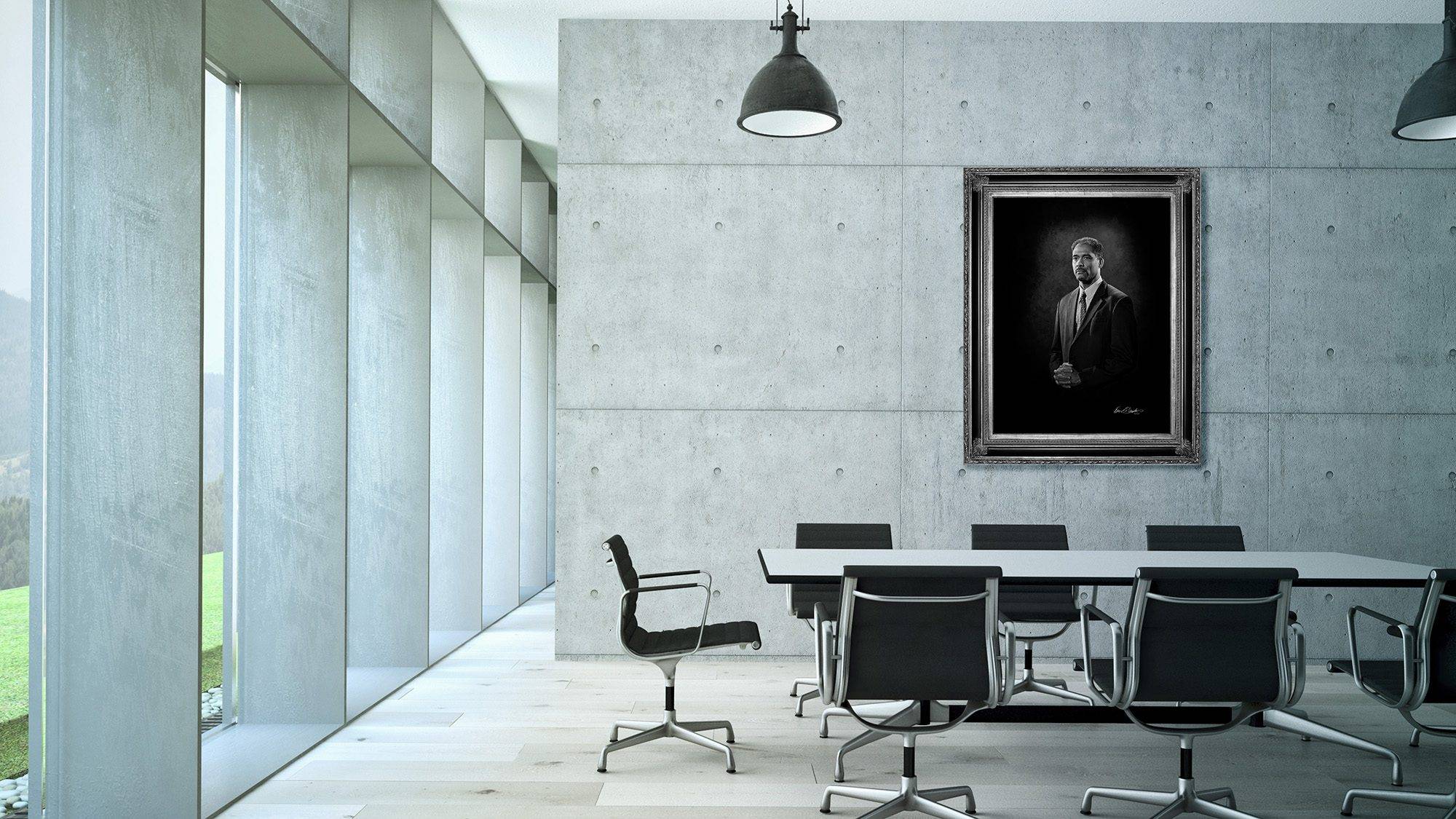
The Essence: Authority, Leadership, and Professional Legacy.
This style stands out for its dignified and strong presence, made for executives, patriarchs, and community leaders. It is a statement piece that captures a lifetime of achievement, wisdom, and character. The lighting is usually directional and sculpted, inspired by the dramatic style of Yousuf Karsh, to create a serious and essential mood. The focus is on the quiet confidence of a leader, not just a passing smile.
- The Setting: The boardroom, the executive office, the private study, or the library.
- Wardrobe: Business formal, black tie, or attire that speaks to the subject’s professional identity.
The Legacy Portrait
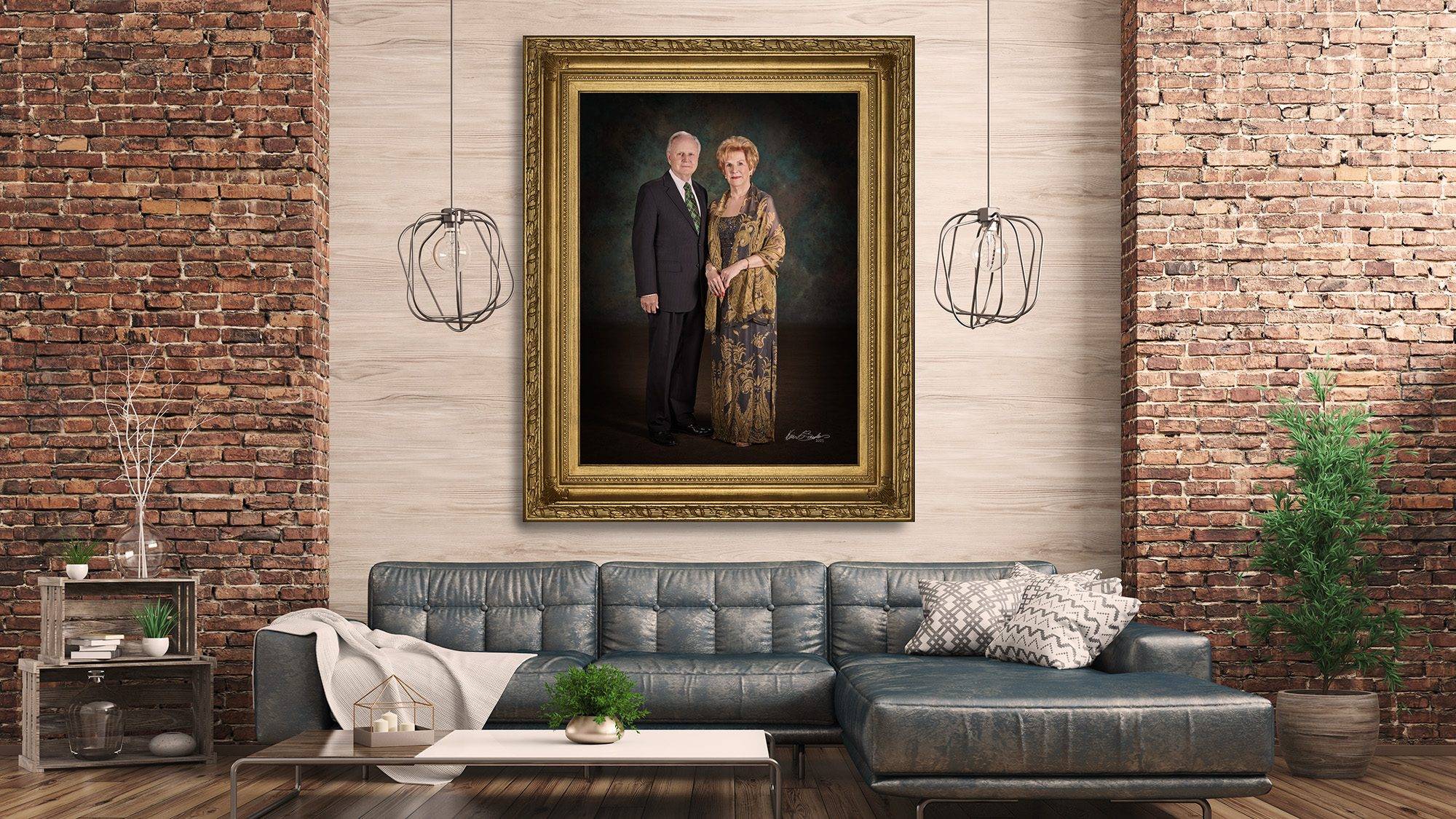
The Essence: Tradition, Heritage, and the Family Cornerstone.
This is the classic family heirloom, the centerpiece of a family’s home and story. The style is timeless and full of emotion, celebrating partnership and the continuity of generations. Inspired by masters like John Singer Sargent, the composition features elegant poses, balanced design, and a setting that reflects the family’s life and values. Its emotional value grows deeper with each year.
- The Setting: The formal living room, the great room, or above the fireplace mantel.
- Wardrobe: Elegant and coordinated attire that reflects the family’s personal style, from formal to business casual.
The Modern Heirloom
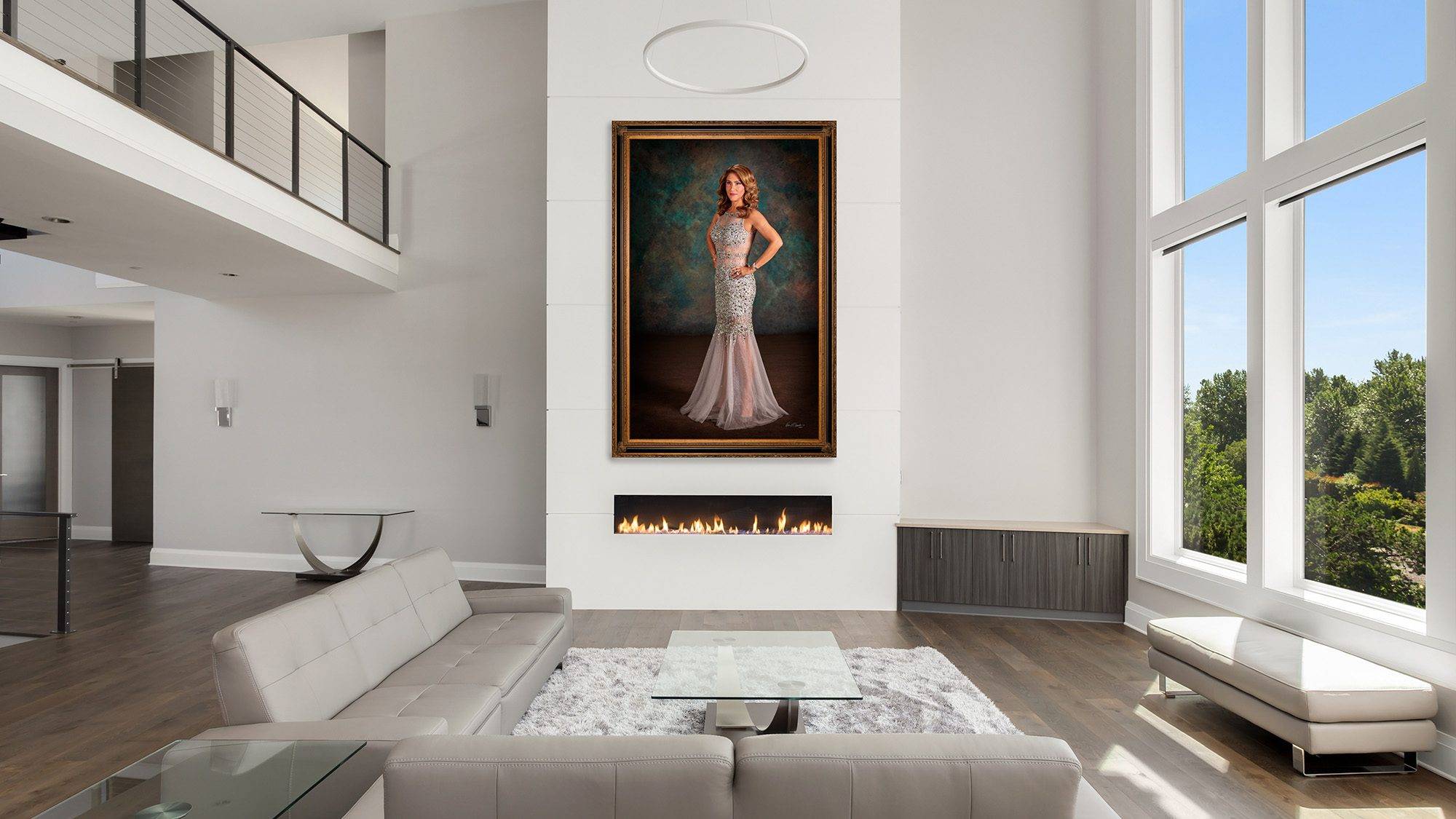
The Essence: Personality, Individuality, and Contemporary Elegance.
This style offers a modern, art-focused take on the classic portrait. While it respects tradition, it highlights the subject’s unique spirit and personality. The lighting may be more creative, but the poses are still traditional; yet, the overall look is more current. It is a bold statement for today’s collector, celebrating an individual’s unique story and character.
- The Setting: A centerpiece in a modern home, a grand entryway, or a well-lit living space.
- Wardrobe: Can range from elegant evening wear to more expressive, fashion-forward choices that reflect the subject’s individuality.
The Aspirational Portrait
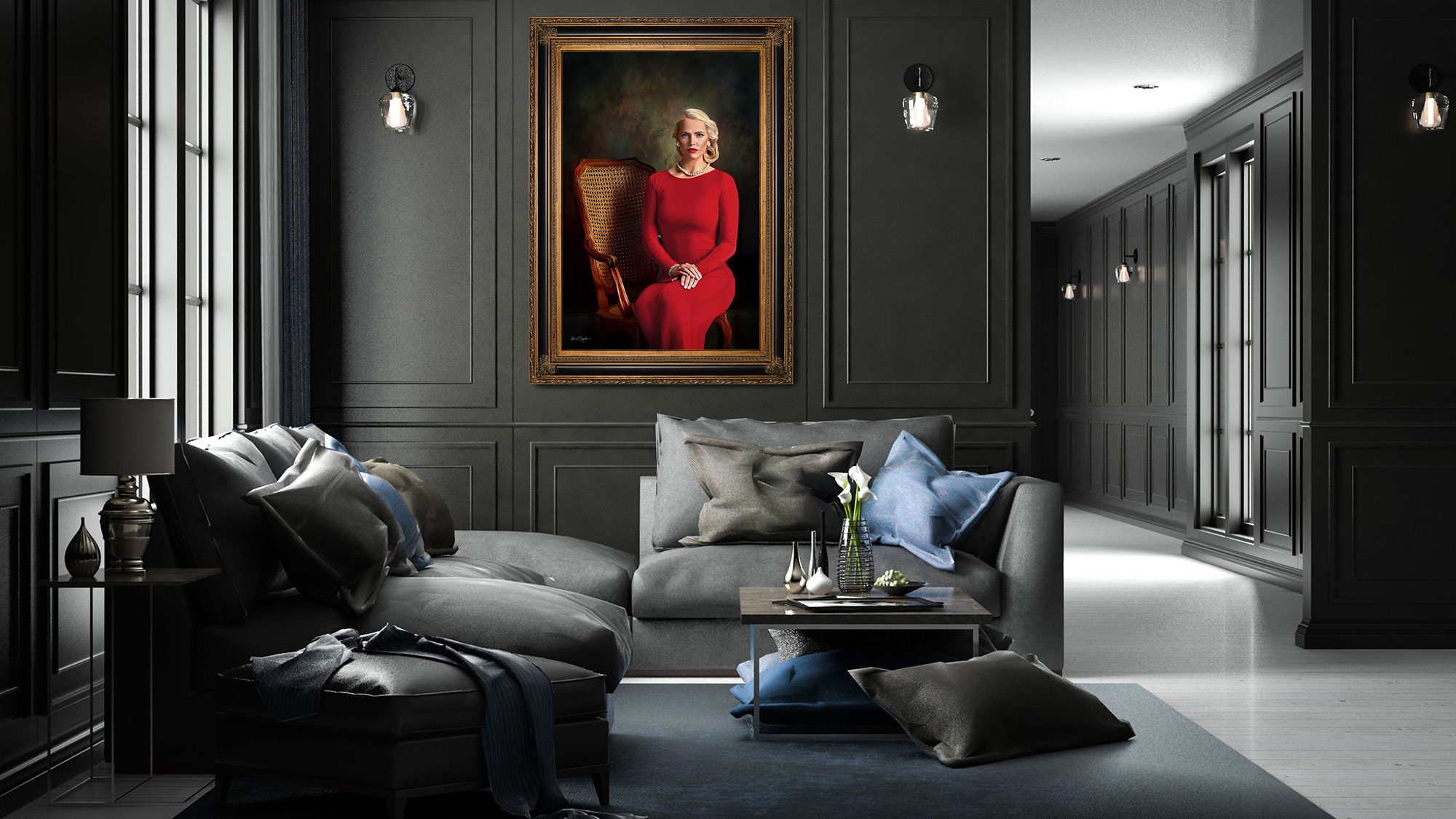
The Essence: Drama, Beauty, and Narrative Fine Art.
This style began with a client’s request: “If I get a portrait from you, I want to feel like I’m on The Red Carpet.” That one comment inspired some of our most celebrated work, moving beyond traditional portraiture into narrative fine art. This is the “wow factor” piece, meant to stand out. The goal is to create a scene full of dramatic beauty and elegance, telling a story of aspiration and romance with cinematic lighting and a painterly touch.
- The Setting: Any space that can accommodate a major work of art; a grand staircase, a great room, or a private gallery space.
- Wardrobe: Exclusively formal: ball gowns and couture.
Preparing for Your Commission: A Guide to Timelessness
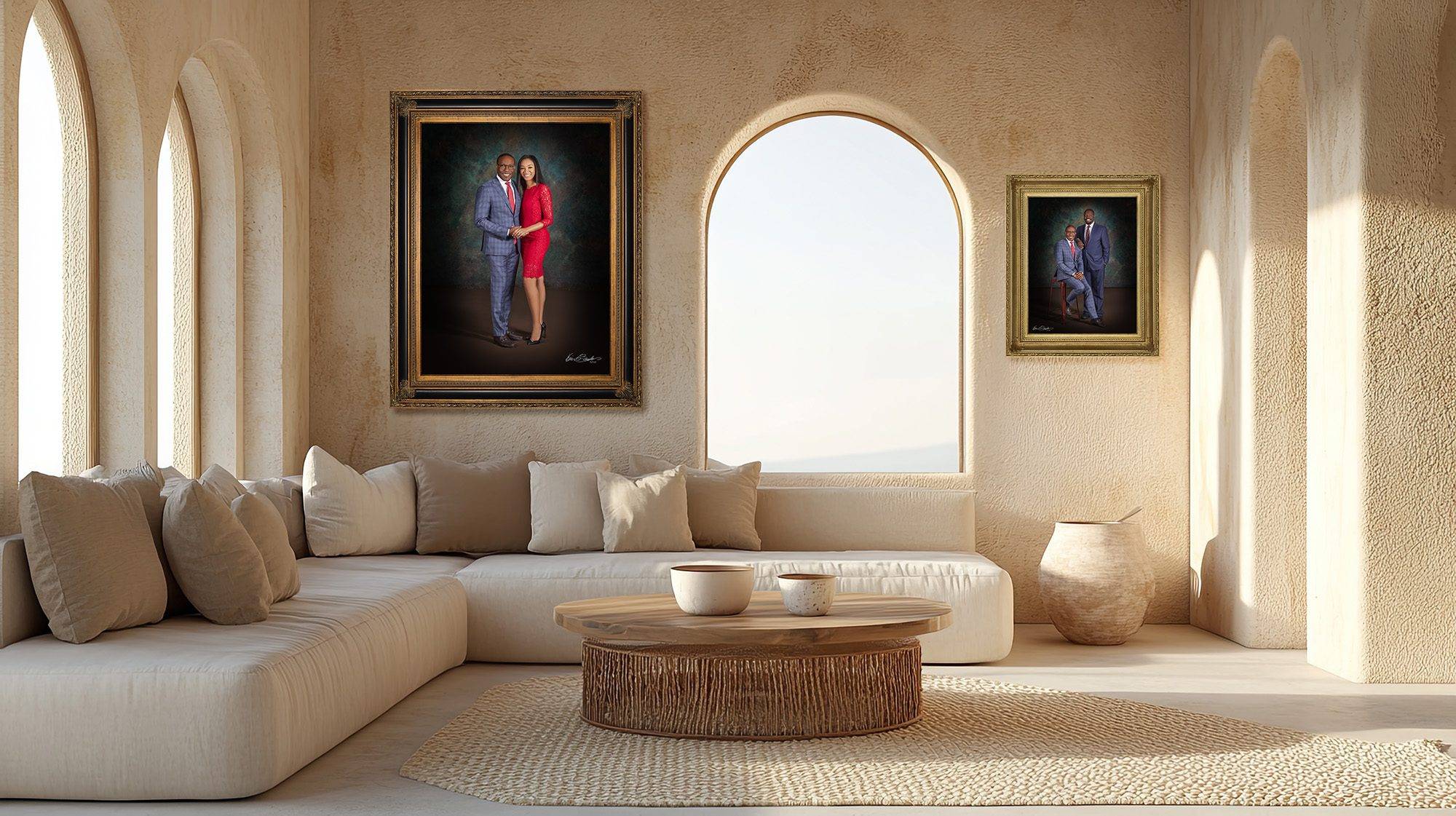
A portrait becomes a true generational heirloom over 20 years, so spending extra time planning is worthwhile. Sargent demonstrated this by keeping “Madame X” for thirty years. The choices we make together are meant to last.
Your Wardrobe: A Foundation for Permanence. Choosing more formal clothing always creates a more timeless look.
- For Black & White Portraits: Bold patterns and high contrast work well. While these can be distracting in color, they add dramatic texture and interest in black and white.
- For Color Portraits: Aim for harmony. We suggest solid, complementary colors that help you feel like your true self. We will help you choose a palette that suits your skin tone and the portrait’s setting.
- Bring Options: Each session is open-ended. We encourage you to bring a few outfits to our studio, where you’ll have a private changing room. This way, we can try different looks and find the one that suits us perfectly.
Ready to Define Your Legacy?
This guide is just the beginning of our creative work together. It invites you to explore what a timeless portrait can be. The most essential part of every commission is the conversation: a private, no-obligation meeting where we discuss your vision, answer your questions, and start the journey of creating your masterpiece.
When you are ready to take the next step, I invite you to contact us.